UttaraPedia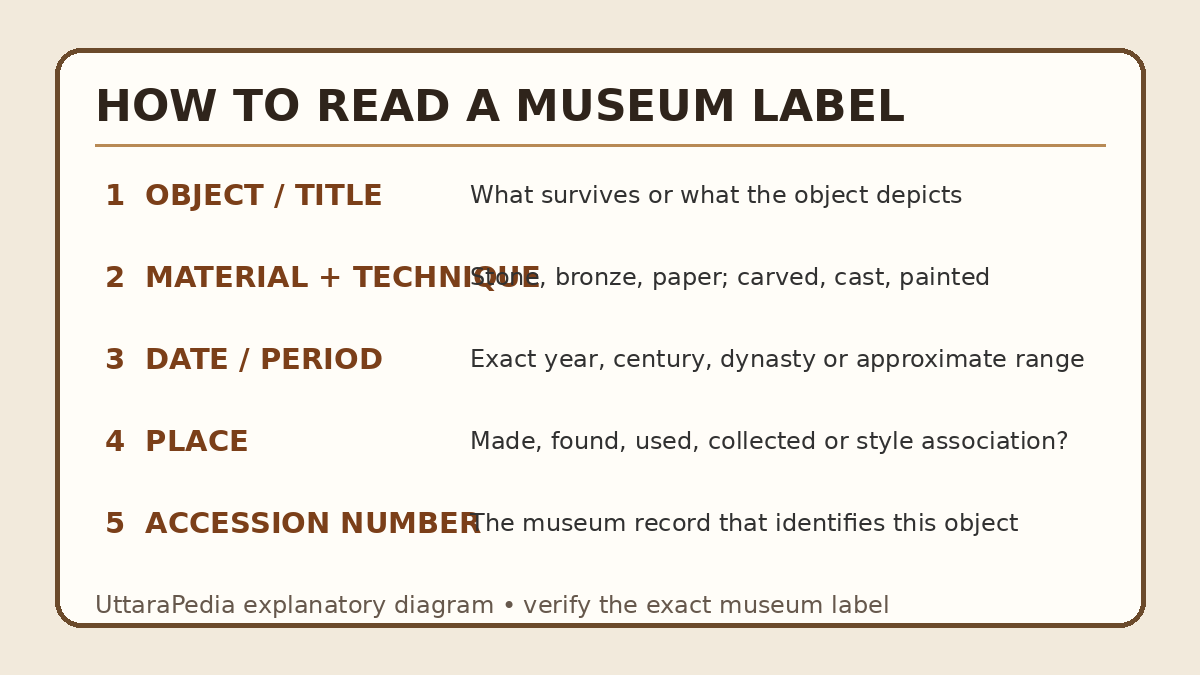
Museum label छोटा text block लगता है, लेकिन वह पाँच अलग सवालों का जवाब दे सकता है—object क्या है, किस material का है, कब बना, किस place से जुड़ा है और collection में कैसे आया? Fields को अलग-अलग पढ़ने से quick glance useful visit में बदल जाती है।
Object name से शुरू करें, वहीं न रुकें
पहली line modern descriptive name, traditional name या object में दिखाया subject दे सकती है। Title जरूरी नहीं कि वही नाम हो जो original maker use करता था। Label में “figure,” “fragment,” “manuscript folio” या “coin” लिखा हो तो वह आज बची चीज बता सकता है, पूरा original object नहीं।
Material से object का behaviour समझता है
Stone, bronze, terracotta, paper, cloth, wood और pigment अलग तरह से age होते हैं। Material field weight, surface, colour, damage और conservation needs समझने में मदद करता है। Technique अलग clue है—cast, carved, painted, woven या printed बताता है material पर काम कैसे हुआ। हर metal object को bronze न लिखें जब तक label ऐसा न कहे।
Period और date की language ध्यान से पढ़ें
Label exact year, century, dynasty, broad period या estimated range दे सकता है। “12th century” और “made in 1200” same बात नहीं हैं; “circa” approximate date बताता है। Label BCE या CE use करे तो notes में वही notation रखें, चुपचाप बदलें नहीं।
Place के कई मतलब हो सकते हैं
Place name बता सकता है object कहाँ मिला, बना, use हुआ, collect हुआ या किस style से associated है। ये अलग claims हैं। Caption लिखने से पहले field heading पढ़ें। Delhi में display sculpture अपने-आप Delhi की नहीं और painting school एक modern district से बड़ा region cover कर सकती है।
Accession number useful anchor है
Accession या collection number similar works में exact object पहचानने में मदद करता है। Study notes बनाते या online collection में object खोजते समय इसे लिखें। Provenance या acquisition text donor, purchase या excavation context बता सकता है, लेकिन छोटी label पर line न होने का मतलब यह नहीं कि museum के पास record नहीं।
Label के पास audio guide, QR code या gallery introduction हो तो उसे object label का replacement नहीं, extra context समझें। दोनों में दी information का scope अलग हो सकता है।
दो minute का reading order
- Title और object type पढ़ें।
- Material और technique पहचानें।
- Exact date, approximate date और historical period अलग रखें।
- देखें place field असल में क्या बताता है।
- Accession number और बाद की research का एक सवाल लिखें।
National Museum archaeology, manuscripts, coins, paintings, textiles और decorative arts तक कई collections बताता है, इसलिए हर label का pattern same नहीं होगा। Museum visit-planning guide tickets, closing day और photography rules समझाती है। Gallery में अगला useful step लें—जहाँ photography allowed हो वहीं label की photo लें, नहीं तो key fields सही copy करें; फिर deeper context के लिए museum की official collection page देखें।