
India is not one compact sightseeing circuit. A first visit becomes easier to plan when you choose a reason to travel, a workable arrival city and a manageable area. You can return for a different region; your first itinerary does not have to represent the entire country.
Start with two sentences: “I want more time for…” and “I am willing to spend this much of the trip moving between places.” They make the trade-off between a new destination and another day in a place visible before you book.
Choose the experience before the city list
For a northern heritage route, investigate Delhi, Agra and Jaipur, the cities of the Golden Triangle. For a southern city-and-coast starting point, compare a Chennai-based visit with a Kochi-based Kerala visit. They are different plans, not neighbouring stops to add automatically to one short route.
Mumbai offers a western metropolitan starting point; Kolkata offers an eastern one. You might focus on city neighbourhoods, museums, food or architecture before adding an onward destination. These are starting questions, not a ranking or a claim that any one region suits every visitor.
Open the official destination pages for the places that interest you. Record what you actually want to do there, not only the name. “Spend a morning exploring one neighbourhood” gives you a clearer planning unit than “see Mumbai”.
Count usable days, not just leave dates
Draw one row for each date and mark the actual arrival and departure times. A trip spanning seven calendar days with a late first arrival and an early final departure does not provide seven full sightseeing days. Add the journey from the airport or railway station to the accommodation.
Keep the first arrival simple enough to accommodate tiredness or a changed flight. If you have family visits, work commitments or a fixed event, place those first. Then choose the sightseeing that fits around them rather than hiding those commitments inside an overfilled itinerary.
Treat every change of base as a separate decision
For each move, write down four things: departure address, boarding point, arrival point and the next overnight address. Include packing, local transfers and check-in, not just the time shown for the train or flight.
A domestic flight can connect distant parts of India, but it still creates a travel day with airport journeys. A railway booking requires the exact stations, not merely the city names. Compare the whole door-to-door move before deciding that an extra destination is easy.
Use a route sketch instead of a packed timetable
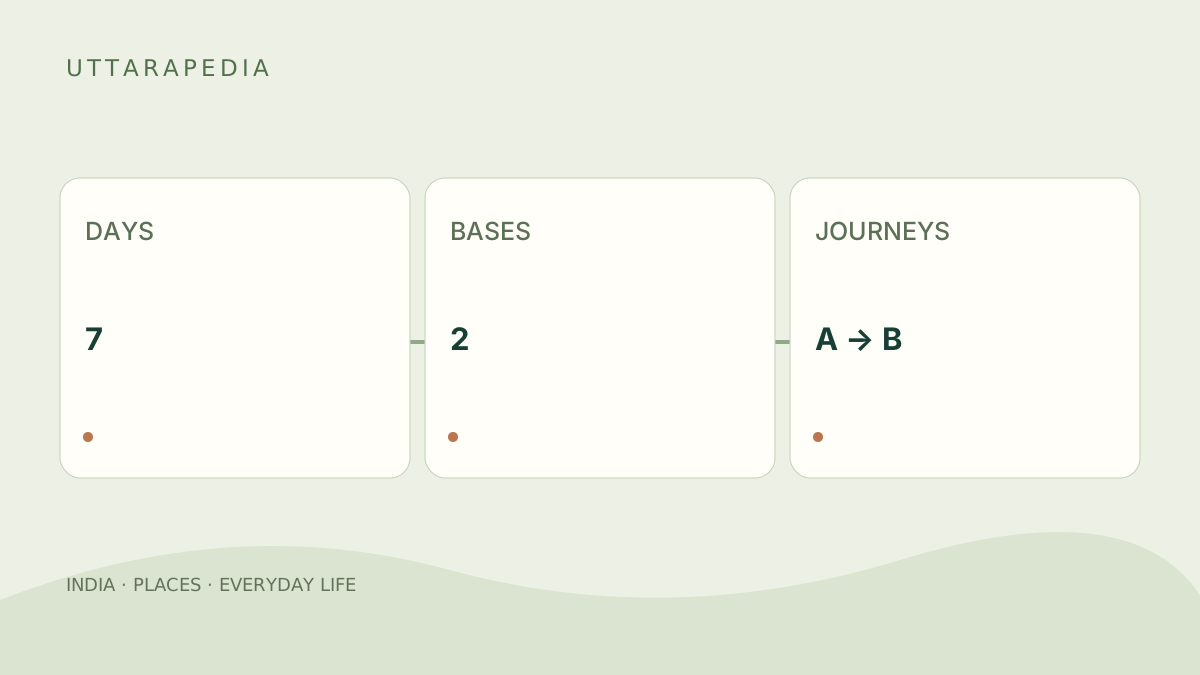
Try an illustrative seven-night worksheet: three nights in your arrival base, three in one further base and one placed to make the departure practical. The final night may belong in the first base or the second, depending on the real connection. This is a planning exercise, not a recommended package or a promise that any two cities fit it.
Test your own plan by removing one hotel change. What does the freed time allow: a slower museum visit, an unplanned meal, a family afternoon or simply rest? Keep the extra move only when its benefit is worth the time it takes.
Check conditions for each place and date
Do not apply one description of “Indian weather” to every destination. Check the actual place, month and planned activity, then consult current local information near departure. A city walk, a coastal stay and a mountain journey raise different planning questions.
Read the official travel information relevant to your citizenship and circumstances through the links in your language hub. For attractions, verify the operator’s current opening arrangements before building a day around them. This guide deliberately gives no live fares, fixed opening hours or general assurance about current access.
Finish with a one-page journey note
Keep your overnight stops, confirmed transport, exact addresses and a short list of priorities together. Save an accessible copy for arrival and agree the first meeting point with anyone collecting you. If a plan changes, update that one note so your companions are working from the same version.
Use the rail-ticket guide for dates and reservation status, and the place-name guide for matching addresses across scripts. Those practical checks work across an India itinerary, whether your first base is Delhi, Mumbai, Chennai, Kochi or Kolkata.