UttaraPedia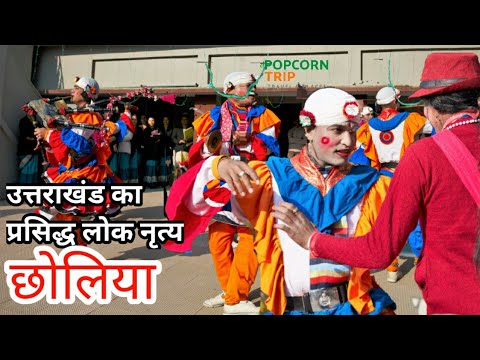
A short clip of Chholiya often concentrates on flashing swords. That is a striking detail, but it can leave out the people, rhythm and occasion that make the performance meaningful. A better way to watch is to widen your attention: look at how performers respond to one another, listen to the music and find out what event you are attending.
Begin with the context
Chholiya is a Kumaoni dance tradition associated with wedding celebrations. The Uttarakhand Judicial and Legal Academy's account describes paired sword-and-shield movements and mock combat. These are useful starting facts; they do not establish the history of every troupe or explain every performance. Ask the organisers or performers how they describe the occasion in front of you.
Watch the relationship between performers
Instead of following only the most dramatic gesture, notice the space between the dancers. How do they approach, turn, pause and make room for one another? Watch for a change in movement when the rhythm changes. You do not need technical dance vocabulary to describe these observations accurately. A brief note about timing or formation can be more informative than repeatedly calling the performance energetic.
Give the musicians attention
Turn towards the accompanying musicians as well as the dancers. Listen for different sounds and how they relate to movement. If you want to name an unfamiliar instrument, ask after the performance rather than guessing from its appearance. Crediting the musicians when sharing a recording helps represent the event as a collective performance.
Let the setting determine how you film
A wedding procession, an invited cultural presentation and a staged programme have different hosts and audiences. Ask before recording identifiable people closely, especially during a family occasion. Stand where the organisers indicate, leave the performers' movement area clear and avoid asking anyone to repeat a gesture for your camera. A useful recording should not become an obstacle to the event itself.
Write a caption that you can support
Include the name of the performance, place, occasion and date when you know them. Add troupe or artist names only after confirming the spelling and permission where appropriate. If someone shares an origin story, attribute it to that speaker or tradition instead of presenting it as a precisely dated historical fact. Avoid assigning an ancient age to the dance simply because another caption does so.
Watching Chholiya thoughtfully requires no expert credentials. It requires patience and a willingness to learn from the people performing it. When the swords, coordinated movement, music and occasion remain together in your account, a short video can become a more faithful record of a living cultural practice.
Sources and further reading
Culture and heritage — Almora district · Traditions of Uttarakhand — UJALA
Read also: Kumaon: places and culture